
When customers receive several deliveries in one week, plain boxes tend to blend together. A branded box does not.
That is why custom-printed shipping boxes are the secret to brand recognition in NYC and other crowded markets. They turn delivery into a visible brand moment before the customer even sees the product.
Well-designed custom shipping boxes do more than look good. They reinforce brand identity, protect the product, support fulfillment, and create a stronger customer experience. The goal is to balance design, durability, and cost without treating packaging as just a box.
Key Takeaways
- Consistent branding helps custom shipping boxes stay recognizable from the doorstep through the unboxing experience.
- The best packaging balances visual impact, product protection, cost, and practical shipping needs.
- Testing materials, structure, and performance before scaling helps reduce avoidable problems and supports smarter packaging decisions.
Why Brand Recognition Matters After the Sale
The customer journey does not end at checkout. Delivery creates another opportunity to reinforce the brand and shape how customers remember the purchase.
Recognition builds familiarity
Customers are more likely to remember brands they encounter consistently. Repeating the same logo, colors, typography, and tone across your website, emails, labels, and packaging helps build familiarity.
Consistency matters more than complexity. One recognizable design feature used across every shipment can be more effective than a crowded box that changes with every order.
Over time, these repeated visual cues help customers identify the brand before they even read its name.
Delivery is a brand moment
For an e-commerce business, packaging may be the first physical interaction customers have with the brand.
A custom-printed box connects the online purchase to something tangible. It can also extend brand visibility because coworkers, neighbors, reception teams, and other household members may see the package.
In a busy market like New York City, that added exposure gives brands another opportunity to reinforce a recognizable identity.
Packaging shapes product expectations
Customers often form an opinion before opening the box. Clean, secure, thoughtfully designed packaging can suggest care and professionalism.
A damaged or oversized package can create the opposite impression. Product presentation should feel appropriate for what is inside, whether the order contains an everyday item, delicate goods, cosmetics, or luxury products.
How Custom-Printed Shipping Boxes Build Brand Recognition
Custom packaging gives businesses several ways to remain visible after the original marketing message has disappeared.
They make the brand easy to identify
A logo provides immediate recognition, but color, pattern, illustration, and tone can work just as hard.
The strongest custom printed boxes use a small number of repeatable visual elements. Customers should understand who sent the package at a glance.
A recognizable exterior also helps separate the brand from generic packaging that could belong to any business.
They carry the brand beyond the screen
Digital branding disappears when customers close an app or browser. Custom packaging remains visible during delivery, opening, storage, and sometimes reuse.
That physical presence connects the website, product, and package into one consistent brand image. It also gives the business another opportunity to communicate its brand story through color, copy, and packaging design.
They create shareable moments
Memorable packaging is easier to photograph and share. Strong contrast, clear logo placement, an organized interior, and thoughtful product presentation can all improve visual appeal.
Packaging cannot guarantee social media exposure, but it can make the unboxing experience more camera-friendly. A clean, distinctive box is also more likely to be recognized in customer photos than a plain shipping carton.
They keep the brand visible after delivery
Interior printing can include a reorder link, QR code, care guide, loyalty message, or short brand story.
Useful information gives the package a purpose beyond delivery and may support repeat purchases. Keep the message concise so it adds value without turning the interior into an advertisement.
What Makes a Shipping Box Memorable?
Memorable packaging usually comes from a few strong choices rather than a long list of decorative features.
Consistent brand elements
Use the same core identity customers see elsewhere, including:
- Logo placement
- Brand colors
- Typefaces
- Illustration style
- Tone of voice
Seasonal packaging can vary, but the main identifiers should remain recognizable.
A clear visual hierarchy
The customer should know where to look first. Give the logo, brand name, or main graphic priority and keep secondary content simple.
White space can make even basic custom cardboard boxes feel more intentional. It also keeps the design readable when shipping labels and operational markings are added.
One signature detail
A distinctive feature can become part of the brand’s presence. This might be a bold color band, repeated icon, bright interior, short phrase, or branded sealing strip.
One repeatable detail is often more memorable than several competing effects.
A design that fits the product
The package should match the product category and audience.
Cosmetic packaging may rely on clean typography and precise color. Luxury goods may benefit from restrained graphics and tactile materials. A playful consumer brand may use vibrant colors and conversational copy.
The goal is to create packaging that feels like a natural extension of the product and the brand aesthetics surrounding it.
Choose the Right Box for the Product
The structure must protect the product before it can promote the brand.
Corrugated shipping boxes
Corrugated boxes are suitable for heavier products, fragile items, and multi-product shipments. Their fluted construction adds strength and helps protect products during handling.
Simple one- or two-color custom printing can create strong recognition without adding unnecessary production complexity.
Choose the board grade according to the product’s weight, vulnerable areas, stacking requirements, and shipping conditions.
Custom mailer boxes
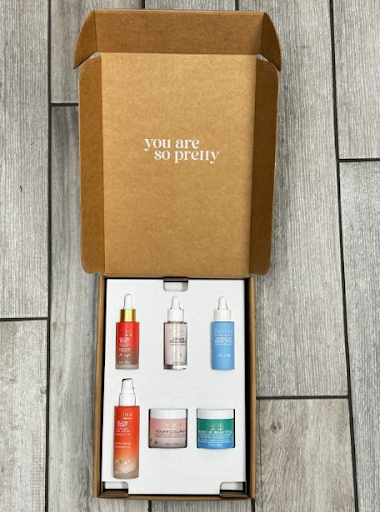
Custom mailer boxes work well for e-commerce orders, subscription programs, apparel, beauty products, and promotional kits.
They combine product protection with a presentation-focused opening. The lid provides a useful branding area, while the interior can hold a short message or graphic.
Some mailer boxes can serve as both the branded package and the shipping container when properly designed and tested.
Product boxes inside shipping boxes
Some products need an inner presentation box and an outer shipping carton. This is common for retail-ready items, electronics, cosmetic packaging, and delicate products.
The added layer improves protection but also increases materials, labor, and shipping costs. Use both only when each one serves a clear purpose.
Rigid boxes for premium deliveries
Rigid boxes are often used for luxury goods, corporate gifts, VIP kits, and limited launches.
Options may include drawer structures, custom inserts, magnetic closures, foil stamping, and soft-touch finishes. They cost more because they use thicker materials and often require wrapping, finishing, and manual assembly.
Rigid presentation boxes may also need an outer shipping carton to protect their appearance in transit.
Flexible mailers for soft goods
Flexible mailers may work for apparel, textiles, and other lightweight items. They reduce storage space and shipping costs but provide less structure than corrugated mailer boxes.
Consider tear resistance, moisture exposure, return handling, and product presentation before choosing this format.
Balance Design With Product Protection
Beautiful packaging loses value quickly if the product arrives damaged.
Start with vulnerable areas
Identify where the product is most likely to bend, scratch, break, leak, or move. Corners, glass components, closures, screens, and delicate attachments may need extra support.
The package should provide the necessary protection around those points rather than using excessive cushioning everywhere.
Use the right size
Oversized packaging increases movement, filler, storage needs, and shipping costs. A box that is too tight may crush the product or make packing difficult.
Custom sizes can improve protection while creating a cleaner presentation. They should also account for accessories, inserts, cushioning, and easy product removal.
Add custom inserts when needed
Custom inserts organize products and reduce movement. Common options include folded paperboard, corrugated board, foam, and molded pulp.
The material should match the product’s weight, fragility, brand image, and sustainability goals. An insert can also improve the reveal by presenting each item in the intended order.
Test before scaling
A screen rendering cannot confirm fit or shipping performance. Use structural samples and practical transit tests before placing a larger order.
Testing is especially important for fragile items, custom inserts, unusual structures, and packaging that must serve as both the presentation box and shipping container.
What Should You Print on a Shipping Box?
The most effective designs balance branding with practical shipping requirements.
Exterior branding
Useful exterior elements include the logo, brand name, website, social handle, signature color, or short message.
Keep the layout clear and leave enough space for shipping labels, barcodes, tape, and carrier information.
Interior messaging
The inside can include a thank-you note, product instructions, QR code, reorder prompt, or short brand story.
Keep the message useful and easy to understand. Interior printing should improve the customer experience rather than add clutter.
Practical information
Plan the carrier-label area before finalizing the artwork. A shipping label should not cover the logo or key graphic.
You may also need designated areas for return labels, handling information, barcodes, or compliance details.
Value-adding content
Useful content might include care instructions, return guidance, reuse ideas, setup videos, or disposal information.
Helpful messaging often creates more value than a generic slogan.
Choose the Right Printing Method
The best printing process depends on the box material, artwork, quantity, timeline, and budget.
Digital printing
Digital printing works well for short runs, prototypes, seasonal designs, and detailed full-color artwork.
It offers flexibility when designs change frequently, though other methods may become more economical at higher volumes.
Flexographic printing
Flexographic printing is commonly used for corrugated boxes. It performs well with bold logos, simple patterns, and one- or two-color graphics.
It is often a practical choice for repeat orders where the design relies on strong shapes rather than fine photographic detail.
Offset printing
Offset printing provides fine detail and consistent color. It is often used for folding cartons and litho-laminated corrugated packaging.
Its setup can be more involved, but larger quantities may reduce the unit cost.
Match the process to the goal
The most advanced process is not automatically the best choice. The right method should support the artwork, material, order size, and required turnaround.
The ideal result is a practical balance of quality, efficiency, and cost.
Use Finishes Selectively
Finishes should strengthen the brand identity rather than compete with it.
Matte and gloss finishes
Matte creates a restrained, low-glare appearance. Gloss adds shine and can make colors appear more vibrant.
Choose based on the brand image and product category. Neither option is automatically more premium.
Soft-touch coatings
A soft-touch finish creates a velvety feel often associated with premium or cosmetic packaging.
It adds cost and may affect recycling options, so it works best when touch is an important part of the customer experience.
Foil stamping and embossing
Foil stamping adds metallic or colored emphasis, while embossing raises selected artwork.
Both techniques can highlight a logo effectively. Since they may require tooling and extra production time, restrained use is usually more impactful.
Magnetic closures
Magnetic closures are typically used in rigid presentation boxes rather than standard shipping cartons. They can create a premium feel but add materials, labor, and cost.
They make the most sense for high-value products, corporate gifts, or campaigns where the package is intended to be kept.
Pick one signature treatment
A Kraft box with one bold ink color may be more memorable than a package with foil, gloss, embossing, and multiple patterns competing for attention.
Choose one treatment that supports the brand and repeat it consistently.
Create a Memorable Unboxing Experience
The unboxing experience should feel intentional without becoming wasteful or difficult.
Plan the reveal
Consider what customers see first, second, and third. The product should feel organized, secure, and easy to access.
Custom inserts can guide the reveal and reduce the need for loose filler.
Add layers with purpose
Tissue paper, printed cards, stickers, and samples can add interest, but every element should serve a purpose.
A printed card might explain the product. Tissue paper may protect a delicate surface. A sticker can seal the wrap and add a recognizable brand element.
Keep it on brand
A luxury brand may use restraint and texture. A playful brand may use vibrant colors and humor. An eco-friendly brand may use fewer components and provide clear material information.
The unboxing sequence should feel connected to the same personality customers saw online.
Make it easy to share
Place the logo where it will appear naturally in photos. Keep the product visible and use a short social handle or QR code instead of excessive copy.
Designing for authentic sharing is more effective than forcing a promotional moment.
Build Consistency Across Every Package
Brand recognition develops when packaging stays identifiable as the business grows.
Create packaging standards
Document approved logo sizes, placements, colors, typefaces, materials, and finishes. These standards help maintain consistency across custom boxes, mailer boxes, labels, gift bags, and inserts.
Adapt without losing recognition
Seasonal editions can change colors or illustrations while keeping the core identity intact. Different product sizes can also use the same visual system, allowing the business to expand without making every package look unrelated.
Coordinate related materials
Labels, inserts, gift bags, retail displays, direct mail, and event materials should feel like parts of the same brand system.
A coordinated approach strengthens the brand’s presence across physical touchpoints.
Make Sustainable Packaging Choices
Eco-friendly packaging solutions should be based on practical design decisions rather than broad claims.
Reduce material first
Right-size the package, remove unnecessary layers, and simplify inserts. These steps can reduce waste, freight weight, and storage needs.
Choose materials carefully
Recycled, recyclable, compostable, and biodegradable are different claims. Coatings, adhesives, films, and mixed materials can affect end-of-life options.
Evaluate eco-friendly packaging options based on how customers can realistically reuse, separate, or dispose of the materials.
Communicate clearly
Provide accurate recycling, reuse, or disposal instructions. Avoid implying that the entire package is sustainable because one component uses eco-friendly materials.
Protect the product
Damaged goods create more waste through replacements and additional shipping. Sustainable materials must still provide the necessary protection.
The strongest solution reduces environmental impact without compromising performance.
Control Costs Without Becoming Generic
Distinctive packaging does not need to be overloaded with expensive features.
Print strategically
Use one or two colors, focus on visible panels, or let the natural material become part of the design.
A simple logo on kraft corrugated board can be highly recognizable when used consistently.
Create a modular system
Use one core box with different sleeves, labels, inserts, or tissue paper across several products.
This approach allows a business to support multiple product versions without manufacturing a completely different structure for each one.
Compare quantity breaks
Larger orders may lower the unit cost, but excess inventory requires storage and can become outdated.
Compare several quantities against forecast demand, available space, and expected artwork changes. This is especially important for NYC businesses with limited storage or strict receiving conditions.
Consider total cost
Include tooling, freight, packing labor, storage, dimensional weight, damage, and returns.
The lowest box price may not produce the lowest total packaging cost.
Common Mistakes That Weaken Brand Recognition
- Changing the design too often. Frequent redesigns make it harder for customers to learn the visual identity. Refresh the packaging without removing its most recognizable features.
- Using too many elements. Too many colors, messages, and finishes can weaken recognition. Choose one focal point and a small set of supporting details.
- Separating packaging from the brand. The box should align with the website, labels, product, and marketing materials. A disconnected design weakens the relationship between the package and the business behind it.
- Prioritizing appearance over protection. A damaged delivery creates a strong negative memory. Structural performance must come before decorative treatments.
- Hiding the logo. Reserve space for shipping labels so they do not cover key branding.
- Ignoring assembly. Complicated boxes can slow fulfillment and lead to inconsistent presentation. Test the structure with the people who will actually pack the orders.
- Skipping physical testing. Always confirm fit, assembly, closure, and transit performance before scaling.
How to Measure Packaging Performance
Packaging performance should be reviewed alongside other marketing, product, pricing, and service factors. These metrics can reveal useful patterns, but they do not prove that packaging alone caused a change.
Monitor repeat purchases
Compare repeat-order trends before and after a packaging update, while accounting for promotions, pricing changes, seasonality, and product performance.
Track customer feedback
Review surveys, ratings, customer-service messages, and social comments for mentions of product condition, presentation, and ease of opening.
Review damage and return rates
Track whether structural changes coincide with fewer damaged deliveries or returns.
A slightly higher box cost may be worthwhile when it contributes to better protection and lower replacement expenses.
Use trackable elements
QR codes, reorder links, and campaign URLs can show how often customers interact with packaging content.
These results should be considered as one part of the broader customer journey.
Bring Your Branded Shipping Boxes to Life
Custom packaging boxes can get complicated when design, printing, assembly, and distribution involve multiple vendors. At All Print Resources, we help keep the packaging vision consistent from concept through delivery.
Our custom packaging solutions include premium packaging, influencer kits, structural design, printed inserts, specialty finishes, assembly, fulfillment, and distribution. We can help create packaging that supports delicate items, corporate gifts, launches, and other branded projects.
We work with businesses in NYC, New Jersey, and beyond. Call All Print Resources to discuss your product packaging goals and create a solution that helps your brand stand out.
Conclusion
Custom packaging matters because the box shapes the first impression. The right structure, durable materials, and consistent design can protect the product and leave a lasting impression.
In today’s competitive market, the strongest packaging combines function with a unique brand identity. When the box performs well and looks unmistakably yours, it can support customer satisfaction and brand recognition.
Frequently Asked Questions
Are custom-printed shipping boxes worth it for small order volumes?
They can be, especially when the design is simple, and the quantity matches current demand. Small runs often work best with digital printing, standard box sizes, or branded labels and sleeves that reduce upfront commitment.
Can printed shipping boxes interfere with carrier labels or delivery?
They can if the artwork covers areas needed for labels, barcodes, tape, or handling instructions. Leave a clear, high-contrast space for operational information so the branding remains visible without affecting scanning or delivery.
How often should a brand update its shipping box design?
Update the design when the brand identity, product line, or customer needs change, not simply to make the box look new. Keep recognizable elements such as the logo, colors, and signature graphics consistent so customers can still identify the brand.


